Baseline Demographics and Clinical Characteristics
| • | Almost three-quarters (74.1%; n = 451) of the 609 enrolled patients completed the study |
| - | The primary reason for discontinuation (20.4% of 158 patients) was withdrawal of consent |
| • | Baseline patient characteristics are presented in Figure 2 |
Figure 2. Baseline Patient Characteristics
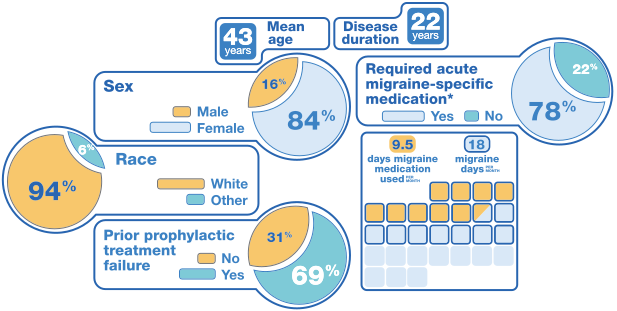
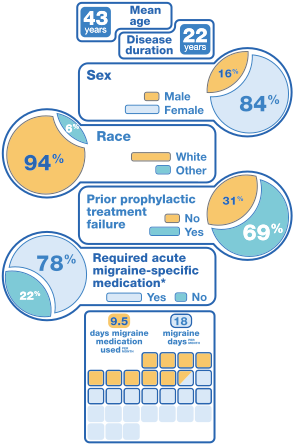
Full analysis set; data represent mean unless otherwise indicated.
| * | Based on 605 patients who were in the efficacy analysis set. |
Safety
| • | Total exposure during the double-blind treatment phase (DBTP) was 43.1 patient-years for both the erenumab 70 mg and 140 mg doses and 63.7 patient-years for placebo; total exposure during the open-label treatment phase (OLTP; 70mg and 140 mg) was 527 patient-years |
| • | Exposure-adjusted incidence rates of treatment-emergent adverse events (AEs) are reported in Figure 3 and Table 1; no new safety events and no dose-dependent AEs were reported |
| • | Most AEs were grade 1 or 2 in severity; no grade 4 or fatal AEs were reported |
Figure 3. Exposure-Adjusted Incidence Rates of Treatment-Emergent Adverse Events (Summarized According to Dose at Time of Occurrence)
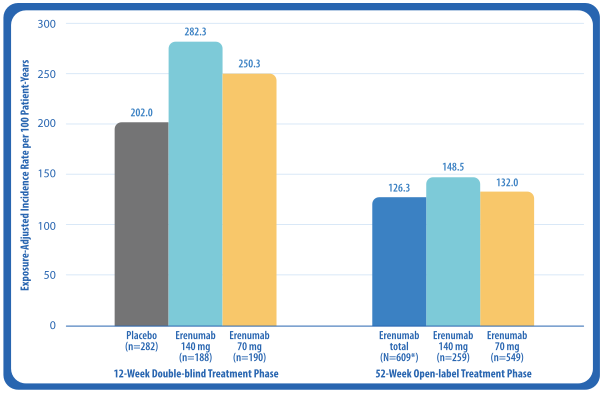
Safety analysis set.
| * | The numbers for the two dose groups (n=549, n=259) are not additive to the total (N=609); 199 patients who were exposed to both doses are also included in these columns; grading categories determined using Common Terminology Criteria for Adverse Events v4.03. |
Table 1. Exposure-Adjusted Incidence Rates of Treatment-Emergent Adverse Events (Summarized According to Dose at Time of Occurrence)
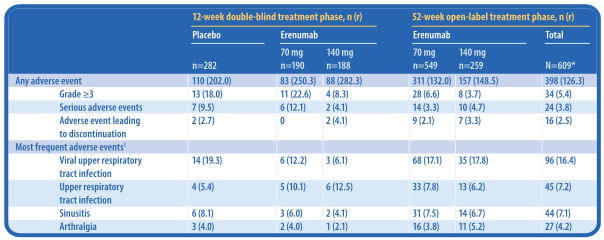
Safety analysis set.
| * | The numbers for the two dose groups (n=549, n=259) are not additive to the total (N=609); 199 patients who were exposed to both doses are also included in these columns; grading categories determined using Common Terminology Criteria for Adverse Events v4.03 |
| † | Adverse events occurring in ≥4.2 patients per 100 patient-years in the total erenumab group during open-label treatment phase; coded in Medical Dictionary for Regulatory Activities v20.0 Abbreviation: r, exposure-adjusted patient rate per 100 patient-years (n/e*100) |
| • | During the OLTP, anti-erenumab-binding antibodies and neutralizing antibodies were observed in 34 patients (5.8%) and three patients (0.5%), respectively |
| - | At the final visit, 17 patients and two patients, respectively, had negative results |
Efficacy
| • | Erenumab demonstrated sustained efficacy over 52 weeks of treatment |
| • | Patients who completed the 52-week OLTP showed a numerically greater benefit with erenumab 140 mg versus 70 mg at weeks 40 and 52 for |
| - | Change from DBTP baseline in MMD (Figure 4) |
| - | MMD responder rates (≥50%, ≥75%, and 100% reduction from DBTP baseline; Figure 5) |
| - | Change from DBTP baseline in monthly AMSM use days (in AMSM users at baseline; Figure 6) |
Figure 4. Change From Double-blind Treatment Phase Baseline in Monthly Migraine Days
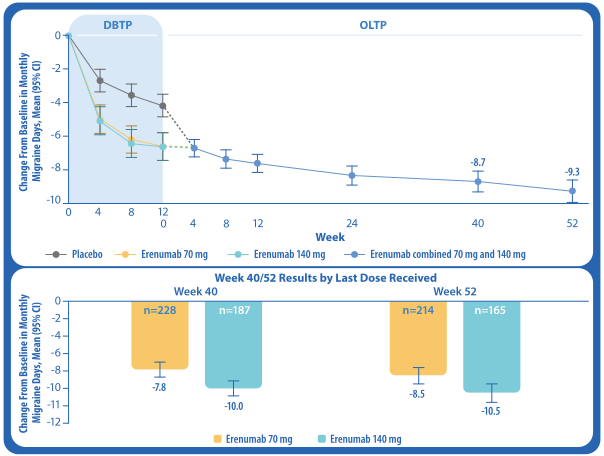
Dashed lines indicate transition from end of DBTP to week 4 of OLTP.
Abbreviations: DBTP, double-blind treatment phase; OLTP, open-label treatment phase.
Figure 5. Monthly Migraine Days Responder Rates ≥50%, ≥75%, and 100%
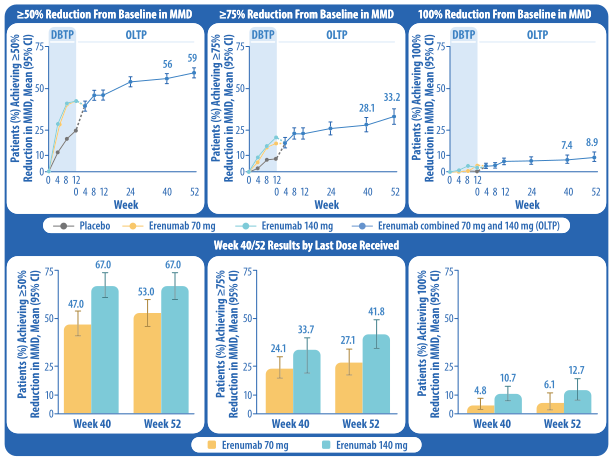
Dashed lines indicate transition from end of double-blind treatment phase to week 4 of open-label treatment phase.
Abbreviations: DBTP, double-blind treatment phase; MMD, monthly migraine days; OLTP, open-label treatment phase.
Figure 6. Change From Double-blind Treatment Phase Baseline in Monthly Acute Migraine-Specific Medication Use Days*
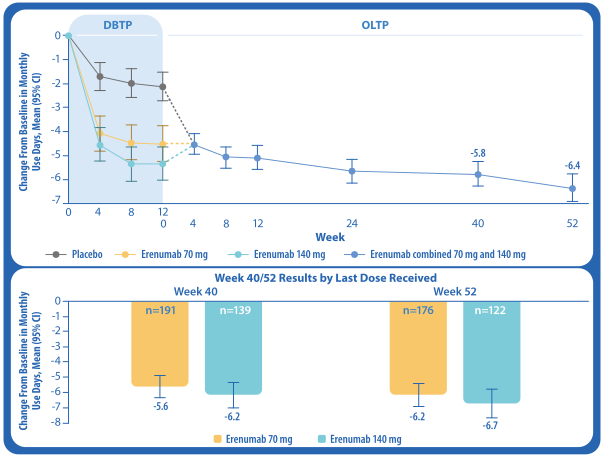
Dashed lines indicate transition from end of double-blind treatment phase to week 4 of open-label treatment phase.
| * | In acute migraine-specific medication users at baseline. |
Abbreviations: DBTP, double-blind treatment phase; OLTP, open-label treatment phase.