Methods
| • | In the pivotal study, patients with chronic migraine received placebo or subcutaneous erenumab 70 mg or 140 mg once per month during the double-blind treatment phase (DBTP)2 |
| • | Patients who completed the 12-week DBTP2 could enroll in the 52-week open-label treatment phase (OLTP; Figure 1) in which patients initially received erenumab 70 mg monthly |
| • | Following a protocol amendment, |
| - | Patients who enrolled after the amendment received erenumab 140 mg |
| - | Patients who were previously enrolled but had not yet completed the week 28 visit received a dose increase from erenumab 70 mg to 140 mg |
| - | Patients who had completed the week 28 visit continued to receive erenumab 70 mg |
Figure 1. Study Design
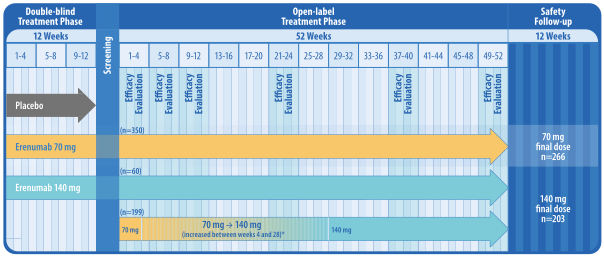
| * | By week 40, any patient who had a dose increase to 140 mg at or before week 28 had received 140 mg for ≥12 weeks and therefore had reached steady state. |
Endpoints
| • | The primary endpoint assessed the long-term safety of erenumab treatment as measured by the subject incidence of adverse events (AEs) |
| • | Secondary endpoints assessed the long-term efficacy of erenumab, including |
| - | Change from baseline to week 52 in monthly migraine days (MMD) |
| - | Proportion of patients achieving ≥50% reduction in MMD at week 52 |
| - | Change from baseline to week 52 in monthly acute migraine-specific medication (AMSM) use days |
Analyses
| • | No formal statistical tests were performed |
| • | A post hoc analysis of efficacy data (based on the last dose received) was conducted for patients who completed the 52-week OLTP |
| • | Week 40 was selected as an analysis point because by that week, any patient who had a dose increase to 140 mg at or before week 28 had received that dose for ≥12 weeks and therefore had reached steady state |